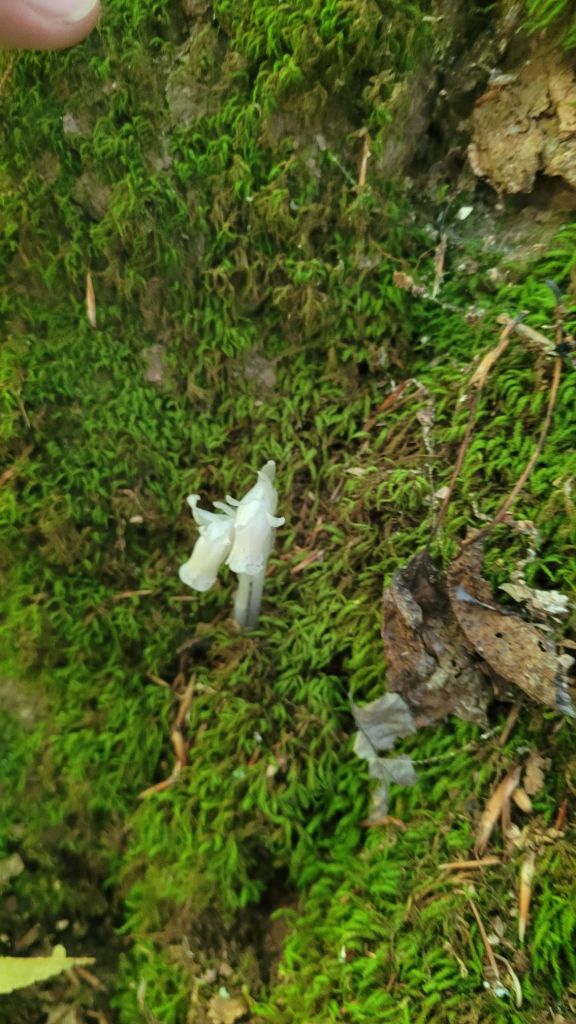
You’re taking a walk in the forest. Stepping over logs, slipping on fallen leaves, and admiring the plants and fungi that surrounds you. Out of the corner of your eye you see something that stands out amongst the verdant foliage: a few small stripes of pure white. You approach the small protrusion and immediately recognize it as a mushroom! Nope! It is actually a plant. Let’s leap90rn a little bit more about this mysterious little fella, Monotropa uniflora.
Monotropa uniflora, or Ghost Pipe is a rare parasitic plant. Rather than photosynthesize to create the carbohydrates and sugars which are necessary to sustain itself, this plant decided to steal from other plants.
Most plants usually undergo photosynthesis to produce their own sugars and carbohydrates. An important part of that process is facilitated by chlorophyll which helps to absorb the energy from sunlight. Chlorophyll is naturally green, which is where most plants get their green color from.
Since ghost pipes don’t photosynthesize and therefore don’t need chlorophyll to capture energy from the sun, the plant is an almost unnatural looking white. This is also where the confusion about whether ghost pipes are plants of fungi usually comes from. It isn’t odd to see a white mushroom, but it’s startling to see a pure white plant!
Alright, so this plant doesn’t need sunlight to grow. Then why is it above ground where it might get damaged by environmental factors? It may be safer for it to stay underground and hidden from moat sources of danger. You’ll see in this next picture why it has to emerge from the relative safety of the earth.
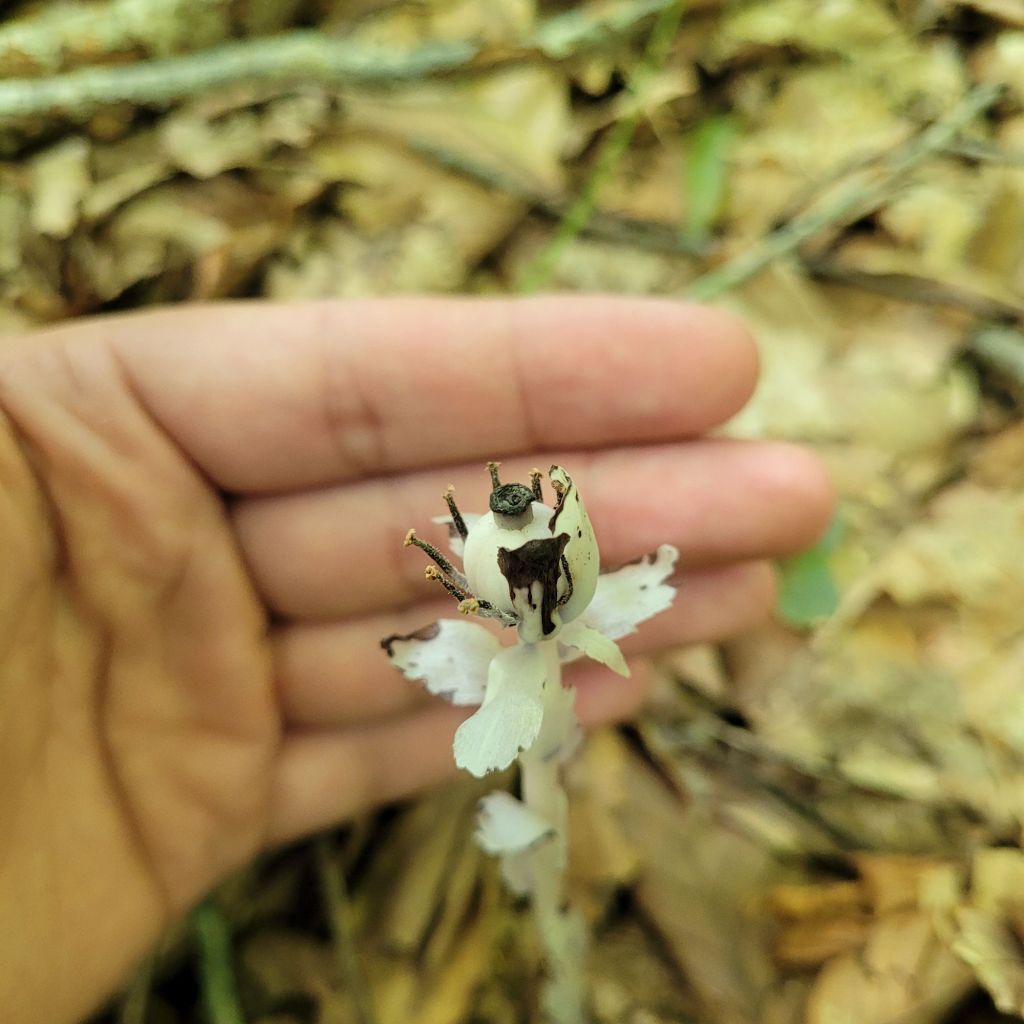
Ghost Pipes can be found above the soil due to its reproductive cycle. The ghost pipe emerges from the ground, flowers, is pollinated by bees, and finally releases its seeds to create new plants.
Next time you’re walking in the woods, keep an eye out for these amazing plants! And keep in mind how sometimes plants can surprise you with their survival strategies.
 Transplant Garden -- Rare and Curious Plants
Leave a comment