When it comes to growing and breeding plants, it is important to know what type of flowers your plant has. There are a few options. A plant could be dioecious: one plant has all male flowers and another has only female. Plants can also be monoecious: each plant has both male and female flowers. The last option is the plant having so called “perfect flowers”: each flower has male and female parts. In plants with perfect flowers there are two further options: self fertile and not self fertile. A self fertile plant can pollinate its female flowers/ female parts of its flowers (pistil). Some plants like Drosera Capensis (Cape Sundew) are specialized in this. When a Capensis flower opens and closes the pollen from the male parts rub onto the pistil and pollinate the flower. This ensures successful pollination even in the absence of bugs that might otherwise facilitate pollination.
Why flower type matters
If you’ve ever grown some common garden plants you’ve surely benefited from the “perfect” flowers we mentioned earlier. Things like tomatoes and peppers have perfect flowers. That’s why you only need one plant (Or even just one flower!) for pollination to occur and for the fruits to develop.
It’s when your plants have another flower type that things get more complex. For example to produce seeds with a dioecious plant, you will need at least two individual plants and you will have to be able to sex your plants. You won’t get any seeds if you have two male plants. You need at least one male plant and one female plant. Of course if seeds were your main concern you could have one male plant and several female plants to “stud” out your male plant. You just need to either hand pollinate or ensure your plants are close enough to ensure insects are tempted to visit both sexes.
Monoecious is a bit simpler than dioecious. A monoecious plant has both male and female flowers. Therefore, if you want to produce seeds, you can do so with one plant. It is important to know if your plant is monoecious to identify which flowers are male or female. If you are depending on outdoor natural pollination, you won’t have to worry about the sexes of your flowers as insects should take care of this job for you. If you’re hand pollinating, you don’t want to waste your time trying to gather pollen from a female flower. You should take the time to identify which flower is which, and perform your pollination correctly.
Kanna has perfect flowers
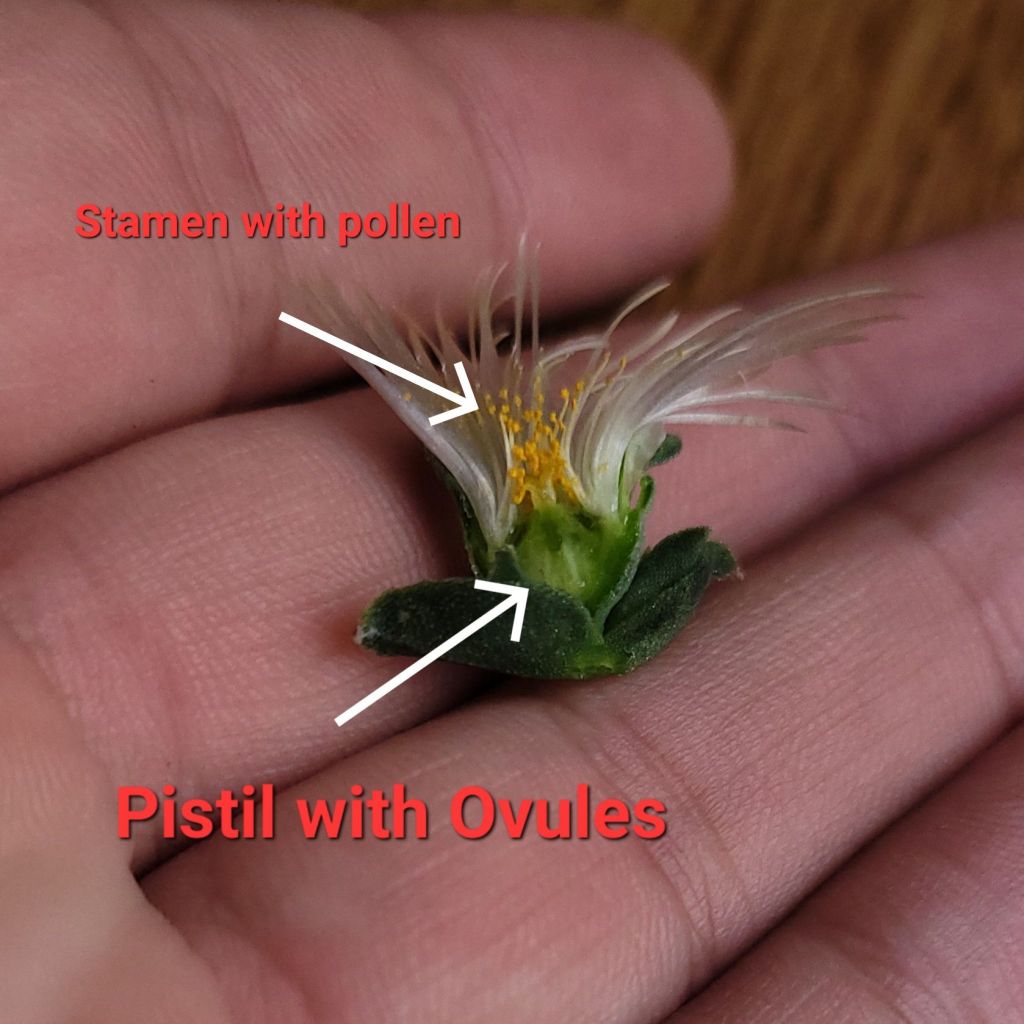
Apologies for a lower quality picture. I was unable to take a sufficient picture with my available tools that can show the entirety of the flower with the ovules clearly depicted. We will get to take a closer (40x) look soon.
The bisected flower in my hand came from one of my hydroponic kanna plants. I removed the flower and cut it in half with a sharp knife. Although the resolution of the above image doesnt show it, I could see the ovules (unfertilized seeds) with the naked eye. Right where the white arrow is pointing to in the above image was packed with miniscule clear spherical ovules. The moisture and transparency of the ovules made it difficult for the camera to pick up, but I was able to gently scrape some ovules out and place them on a microscope slide.
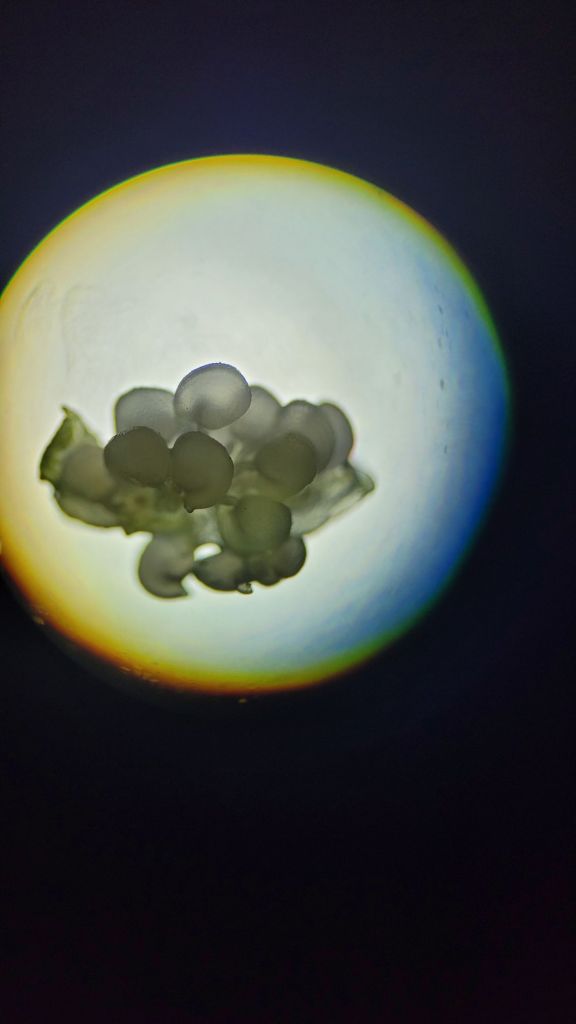
You can see here the ovule cluster. There isn’t much going on here since the flower hasn’t been pollinated and as such there has been no development. This is the stage that the ovules will stay until they have been pollinated. Speaking of which….
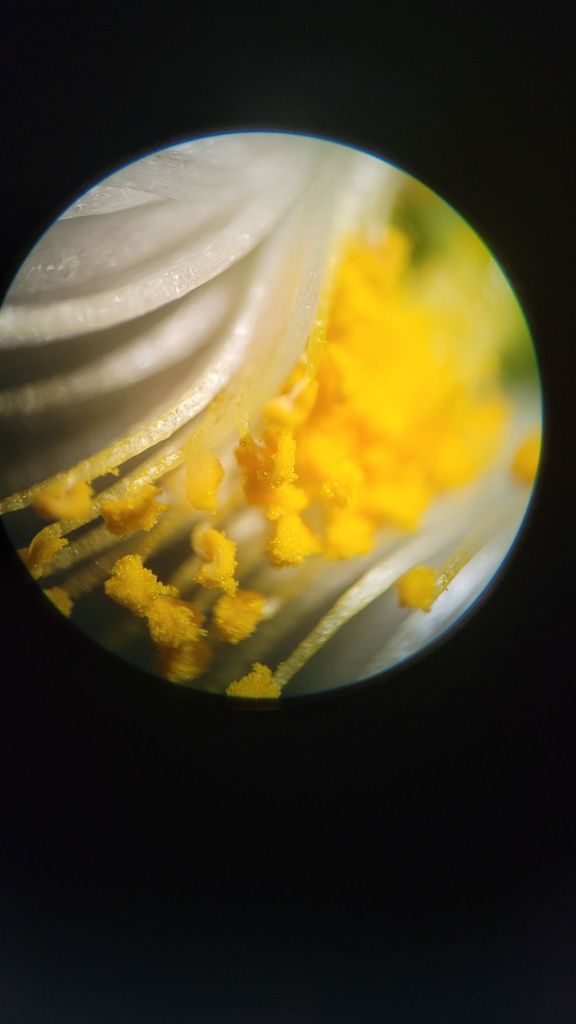
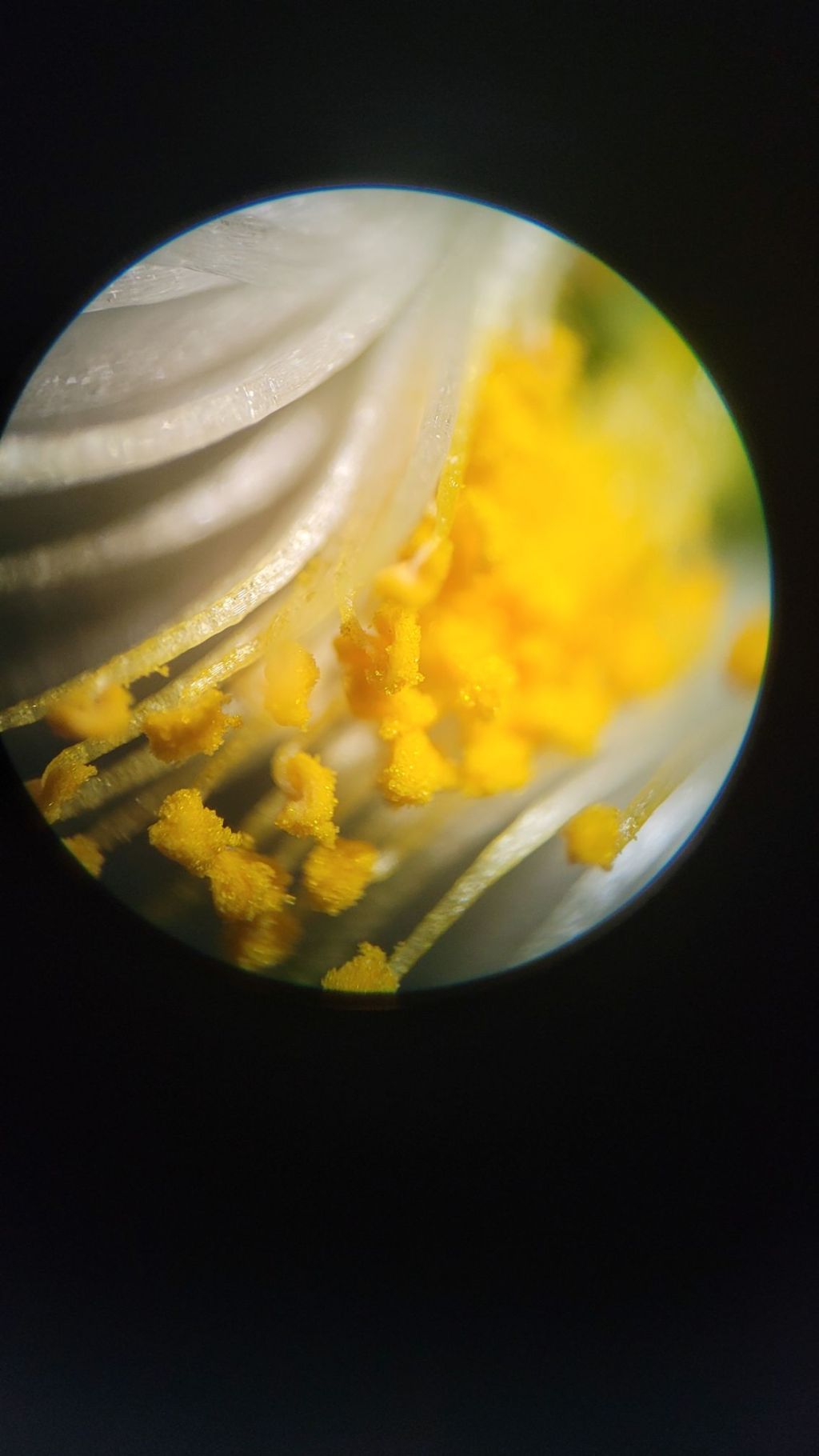
This image is taken from the same flower. You can see the sticky yellow pollen on the end of the stamens. It is important to note that this particular flower has both stamens and the ovule containing pistil. A female strictly female flower will not have pollen and a strictly male flower will not have ovules. This means that Kanna flowers are “perfect” in that each flowers contain male and female parts. Therefore you can collect pollen from and pollinate every flower on a Kanna plant. However, there is one more tricky bit to Kanna flowers.
Is Kanna self fertile?
Even though Kanna has perfect flowers, it is not a self fertile plant. That means that you can’t swish a brush around one of its flowers and expect to get seeds, nor can you collect pollen from one flower and pollinate another flower on the same plant. Kanna needs at least two genetically separate plants to produce seeds. Two clones can’t successfully pollinate each other.
conclusion
I wrote this to hopefully dispel some of the confusion around Kanna plants and their pollination abilities. It can be tough to find accurate information on the topic and I want to make it easier for others to research these topics. Hopefully this article helps!
 Transplant Garden -- Rare and Curious Plants
Leave a comment