We’ve talked about sassafras identification and some of the reasons the compounds in this tree have been banned. I am currently trying to grow Sassafras to help in some land remediation efforts. Invasive plants like honeysuckle are endemic to my area. After removing the honeysuckle, I am attempting to fill the gap that the honeysuckle removal is creating with native plants like sassafras. I was able to find some sassafras trees in my area and get permission to collect some saplings for my project. In this guide, we’ll talk about the most effective way to collect sassafras for propagation and growing your own sassafras!
Choosing a propagation method.
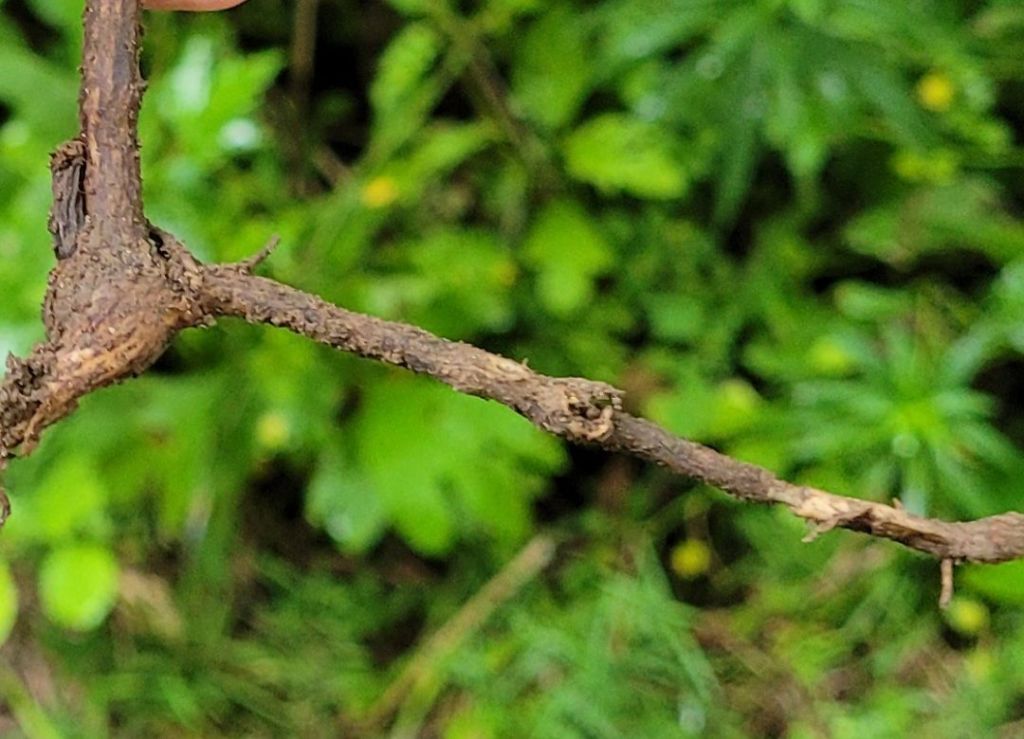
From what I’ve been able to find, it is difficult to propagate sassafras from seeds or from stem cuttings. Many plants readily propagate from stem cuttings. However, in my attempts to propagate sassafras from stem cuttings, I have had no success. I have not tried seed propagation, but from my research into the topic, it is quite difficult to get sassafras to grow from seed. And since I’m looking to grow these trees in a forest, I want to give these trees a strong chance to take hold with minimal competition from the surrounding plants. Thankfully, I have had some success from taking root cuttings
Sassafras Root Cuttings
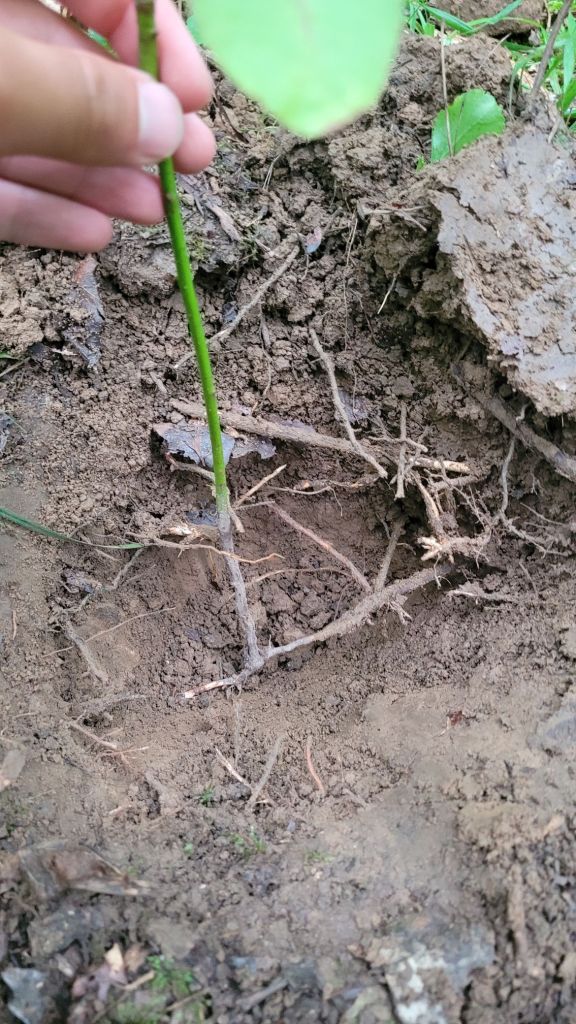
Root cuttings are pretty straightforward. You simply find a sassafras sapling, dig around it, and transplant both the sapling and the attached root segment. See picture:
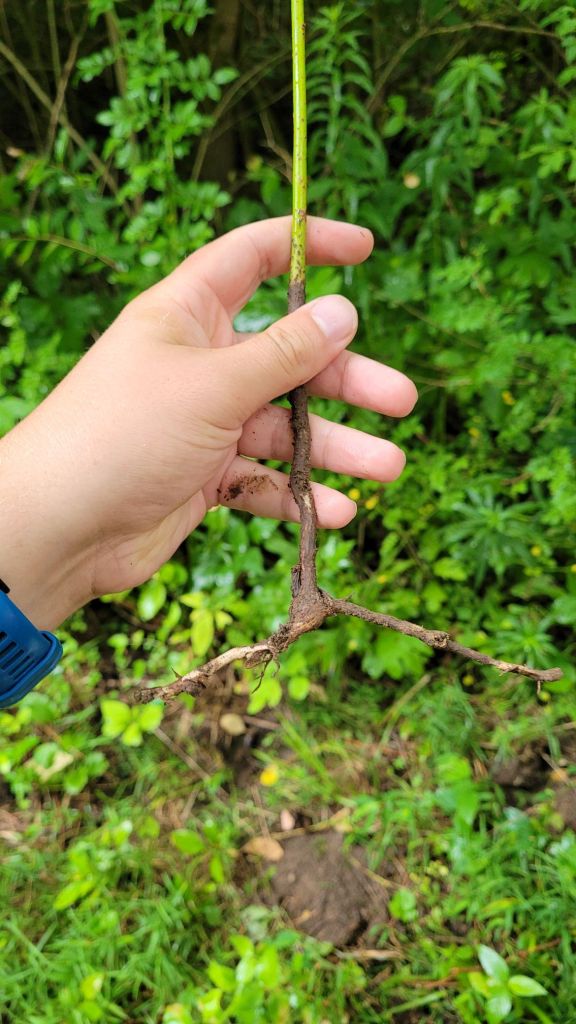
The above picture illustrates perfectly what we are looking to do. You can see the green bark of the sapling, the brown below ground section of the stem, and the horizontal root system.
Sassafras trees send out roots which then put out “suckers” (basically just a clone of tbe mother tree). These suckers serve as backups for the mother tree incase something happens to it. In this way, one healthy mature sassafras tree can put out dozens of clones and create colonies of sassafras trees.
We are going to use this survival strategy to our advantage when we are looking to grow our own sassafras trees. A mature sassafras grove can handle the collection of a few saplings. As long as you don’t harm the mother tree or take an excessive amount of saplings, the health of the grove should be stable.
Since the natural system of sassafras propagation is to create new semi-independant trees (the trees are still tethered to the overall system by the roots), you can easily separate the young tree from the system and grow it on its own. In a few years, if the tree is taken care of properly, it will start trying to make its own grove just like it’s mother tree “taught” it to.
Identify a sapling
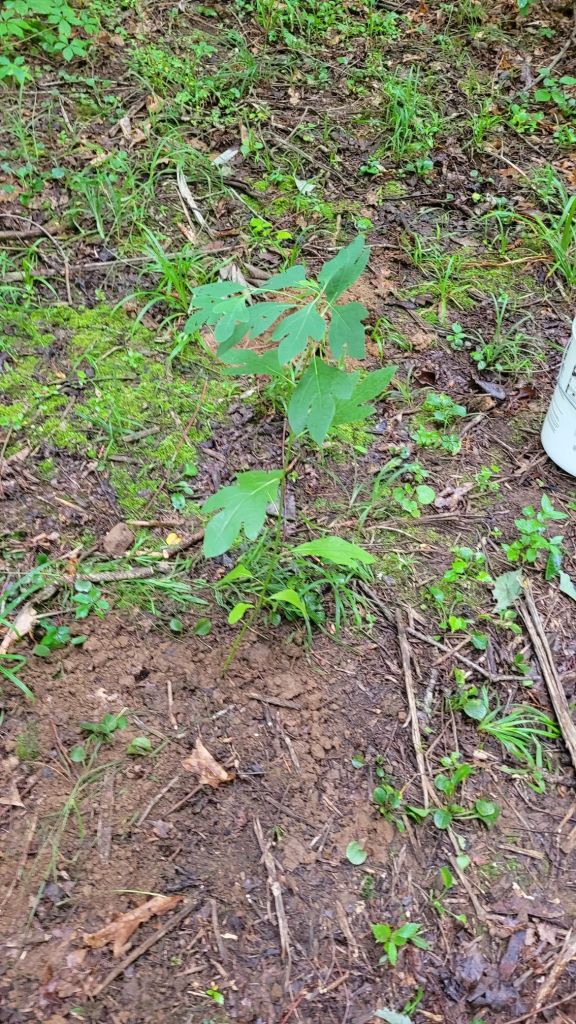
Ensuring you pick a good candidate for your grow goals is important. You wouldn’t want to take a huge sapling if you’re looking to grow a small pot bound tree. You should also try to leave very young saplings alone. I have found that it is quite easy to accidentally pull the plant out but leave the roots with some of the smaller plants. I have planted these rootless plants anyway to hopefully give them a chance at life, but I don’t have much hope for them, unfortunately.
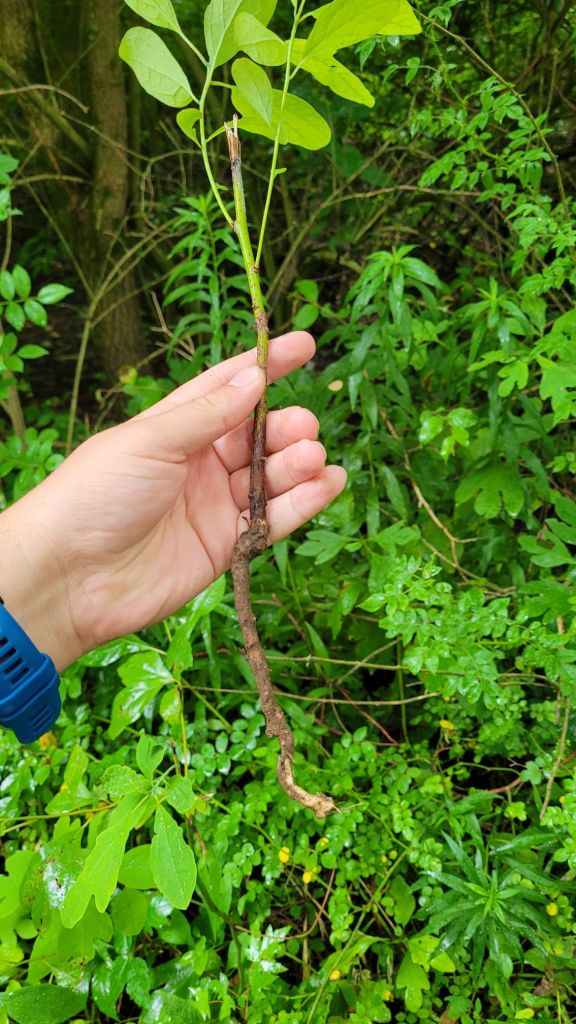
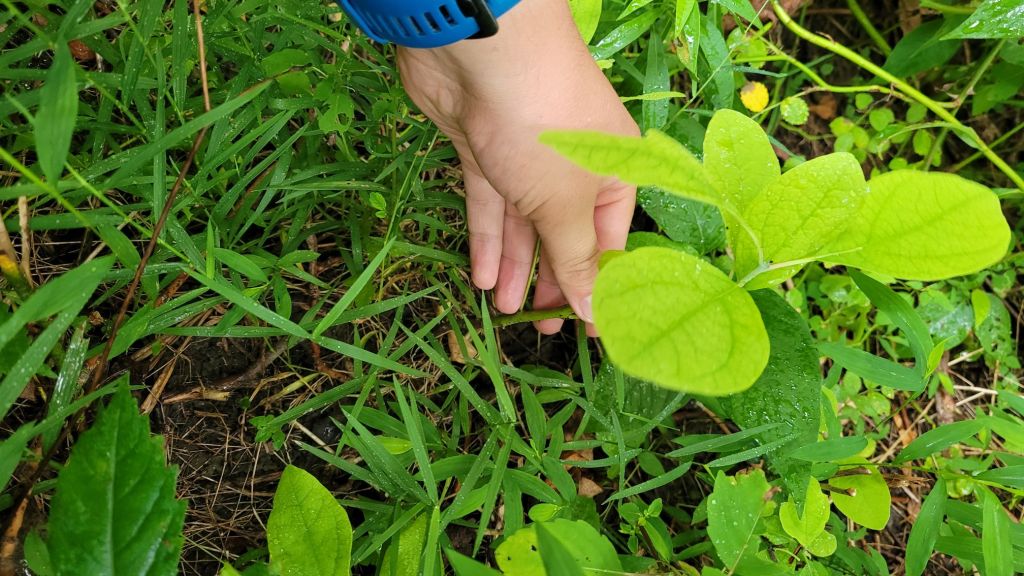
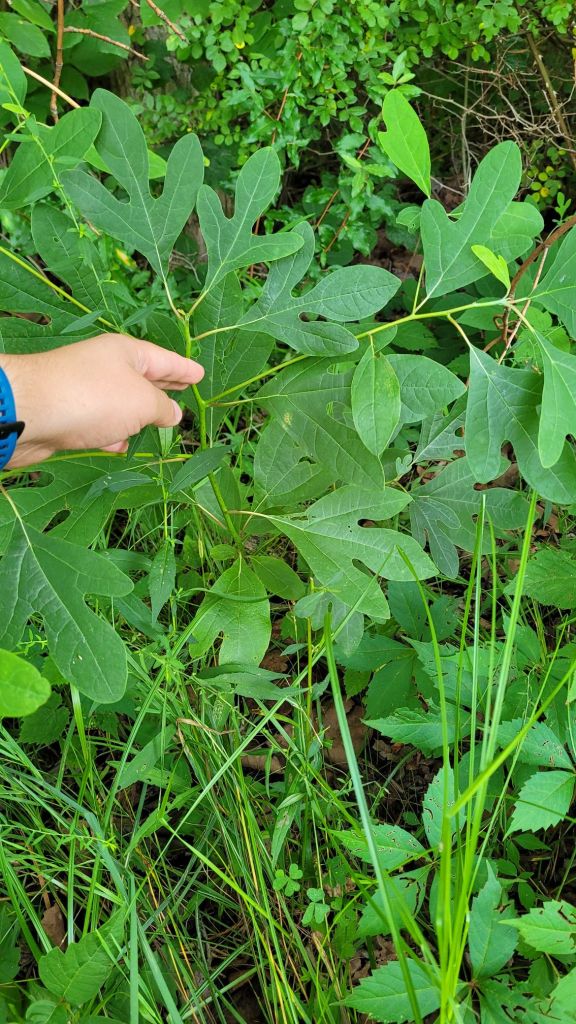
The third image shows a suitable candidate for harvesting. It is sturdy enough to resist accidental breakages. I ran into some issues with that when I tried to start with some smaller seedlings.
Harvesting your sapling
The tool I used was a simple round pointed shovel. The roots seem to be deeper than one would expect. Therefore, I recommend sinking the shovel as far as it can go in a ring around the plant. Make your ring have a radius of 4 inches or so around the plant. You don’t want to accidentally sever the stem, so make sure you are cutting straight down.
Once your ring around the plant is cut, gently leverage the shovel and lift your selected sapling. It doesn’t seem like the runner roots put out many secondary roots at the base of the Sassafras sapling.
Look at the below picture for more context
Once you have leveraged your sapling out of the soil, it is likely that the surrounding soil will fall away and leave the root bare since the simple root doesn’t have much hold on the soil. This is ok, but it also means that the root will start to dry out quicker than if it were surrounded by soil.
The clock starts ticking when you remove the sapling from the soil. You don’t want the sapling to dry out too much. You have a bit of time, but you also don’t want to wait days to plant your new tree. You could wrap the roots in some moist peat moss, if you need to wait until you plant, but it’s best to just plant your tree quickly.
Planting your sassafras root cuttings
You have two options with your new tree. Either put it straight into the ground, or pot it in a pot. In either case, sassafras prefers a sunny area without much shade. Plan accordingly when planting
I usually prefer potting any sort of cutting before planting in the wild. Your sassafras has been injured by its removal from the ground, and it needs to be babied a bit. Having your tree in a pot makes that a bit easier. You can control the water levels and let it produce roots in a safer environment.
Putting your sassafras straight into the ground at its end destination is viable, but you may have to worry about pests, slower root development, and competition from other plants. However, putting your sassafras straight into the ground tends to be quicker and easier. If you have an unlimited stock of sassafras cuttings and you don’t mind if some die, then ground planting may be best for your needs.

Helping your sassafras root
Your new tree already has roots, but the root section you have will probably not be very efficient at absorbing water. There are few, if any, small rootlets that help gather the amount of moisture your tree needs to sustain its bark and leaves. Your sassafras will need time to produce those roots and not rely as much on the mother tree’s root resources. Think of it like weaning a baby off milk.
For the first week or so, you will want to give your sassafras plenty of water. Make sure you aren’t waterlogging the soil (ie, no standing water). You’re shooting for moist, but not drowned. Keep the soil moist so that your plant has access to all the water it needs even with its (currently) deficient roots.
After a while, space out your waterings a bit. Let the soil get a touch dry and then water. A wet-dry cycle will help the plant root since it will naturally try to hunt out moisture in dry times. This will help develop your sassafras’ root system. We don’t want to do this from the get-go as we need your plant to develop atleast a basic root system before we stress test the roots. You don’t have a baby bench press weights. It needs to develop some sort of muscles first.
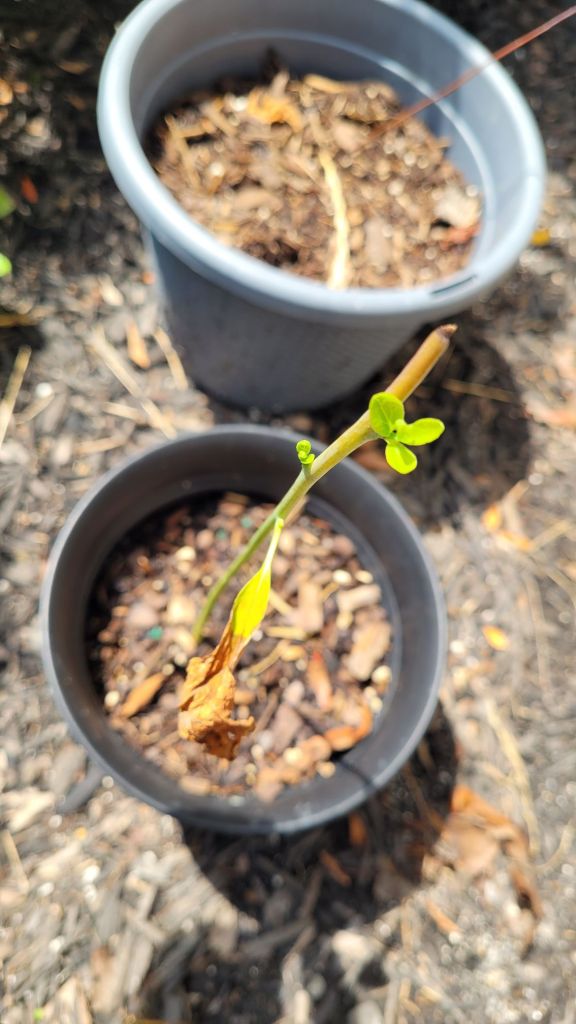
Removing the leaves of your tree is a great way to limit water loss. There is a lot of water in leaves that will do your plant no good when you first transplant it. It is better to cut off the leaves and slow down water loss (which gives your roots more time to develop). If you don’t cut off your leaves, then will shrivel and die anyways. Your plant will just be fighting to keep the leaves the whole time. And that is a battle your plant will lose. Your sassafras will soon put out new, smaller leaves that won’t hog all the water intake from its newly developing root system.
What to look out for
Soon you should start to see buds forming and after that, new leaves developing. This is great because it means that your tree is starting to get used to its new home.
If you see fungus gnats in your pots, you may be over watering. Fungus Gnats eat decaying roots which are a consequence of too much water. Remember, you’re trying to give your freshly planted sassafras tree steady access to water, not trying to drown it.
Keep an eye out for deer and other foraging animals. They may chomp your new tree. You may think about putting a metal wire cage around your tree or keeping your pots unaccessible to foraging critters.
After a few months have passed, check the bottom of your pots for roots, trying to expand out of the drainage holes. If this is the case, you should either repot or plant your tree in the ground.
Monitor for pests and deal with those issues as they arrive.
Hopefully you end up with a healthy tree of your own!
Source and further reading:
https://www.srs.fs.usda.gov/pubs/misc/ag_654/volume_2/sassafras/albidum.htm
 Transplant Garden -- Rare and Curious Plants
Leave a comment