Today we’ll be talking about how you can take plant matter from some of your plants and make medicine from them! This guide is a very simple how to. We won’t go into the more complicated methods or types of extracts. We’ll only deal with one measurement and only a few ingredients. This simple tincture is called a folk maceration tincture. Simply put, you steep fresh herbs in alcohol and let it sit until the herbal constituents have been fully extracted. I like to use fresh herbs rather than dried as drying a herb can potentially degrade the constituents in the plant or even eliminate some of the potency found in a fresh herb. the great thing about fresh herb tinctures is that you don’t have to heat the plant at all and bake off any of the oils or alkaloids present in the plants. NOTE: Fresh herbs are mostly made of water. This will dilute your alcohol. That is why it is important to start with a high proof alcohol for fresh herb tinctures
A note on the “RIGHT WAY” to make a tincture. I said we won’t be dealing with measurements, but I would be remiss to not mention some of the theory behind tinctures. More advanced guides will give you a herb to solvent ratio i.e. 1:3. This ratio means that for every 1 gram of marc (herbal material), you need to add 3 milliliters of solvent (alcohol). Keeping a ratio in mind is definitely helpful for standardization of your extracts. I tend to use ratio when I’m making a big batch of tincture, or I have a limited supply of a rare herb. Keeping your measurements in mind is a great tool, and once you have some experience under your belt, I definitely recommend it.
Why am I teaching you the “WRONG” way then? Because I want people to feel empowered to take part in herbal practices without being scared of a complex process. At the end of the day, you’re throwing plants in booze. I have experience in being so worried. I’ll mess up something simple that I don’t even try the thing I’m worried about messing up. And I want to help others not make that mistake. We’ll get into the things you need to keep an eye on for safety reasons when making tinctures, but just keep in mind: it’s plants in booze.
A tincture has two components: the plant material called the marc, and the liquid that extracts the medicinal components out of the marc. (Note: a tincture is, by definition, an ethanol alcohol extraction.) The liquid is called the menstruum or the solvent. Today, we will be talking about how you can make your first tincture out of plants you may be growing in your garden.
What you’ll need
-A plant
-A jar with a lid
-Scissors
-High proof alcohol. I use Everclear 190 proof (95% Alcohol content)
-A metal spoon or other similar implement
Choose a plant to make a tincture with
Many plants can be used to make tinctures with. Before you decide which plant and what parts you’re growing to make a tincture out of, look at the effects of said plant. Today I’m looking to make a relaxing and anxiety busting tincture, so I’m choosing my lemon balm plant (Melissa officinalis).

Once you’ve identified your plant, you need to decide how to cut it. I’m pruning my plant, because I want it to keep growing it through the season. If you wanted to, you could harvest the whole plant.
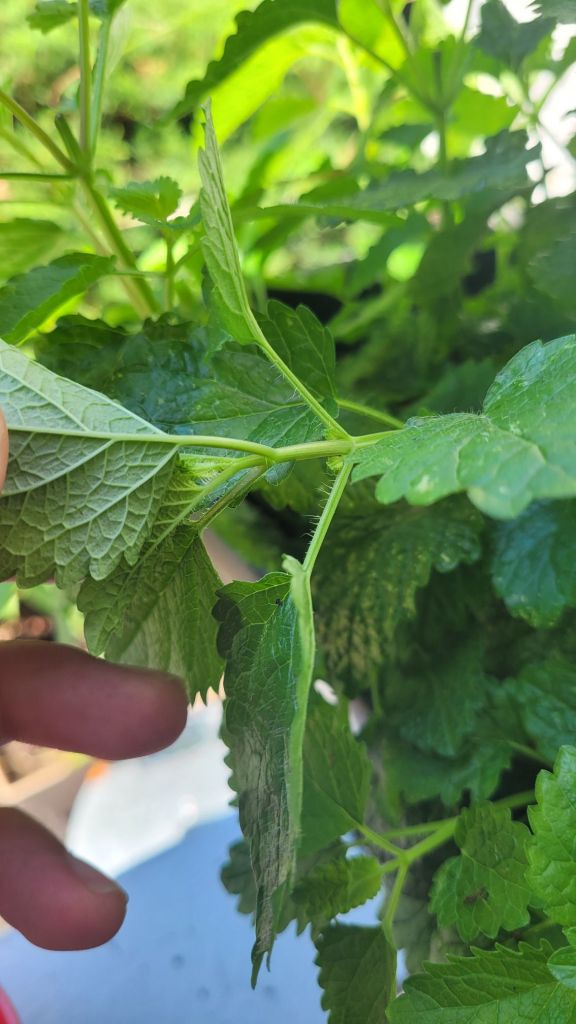
I’m choosing to cut right above a new branching node. Pruning here will cause the plant to put more resources into growing the nodes and replacing what was taken from it. By cutting here, I’m encouraging the plant to keep growing while also taking the parts I want. If you keep doing this, it will cause the plant to grow stronger over time since you’re taking one cluster of leaves, which will then be replaced by two clusters.
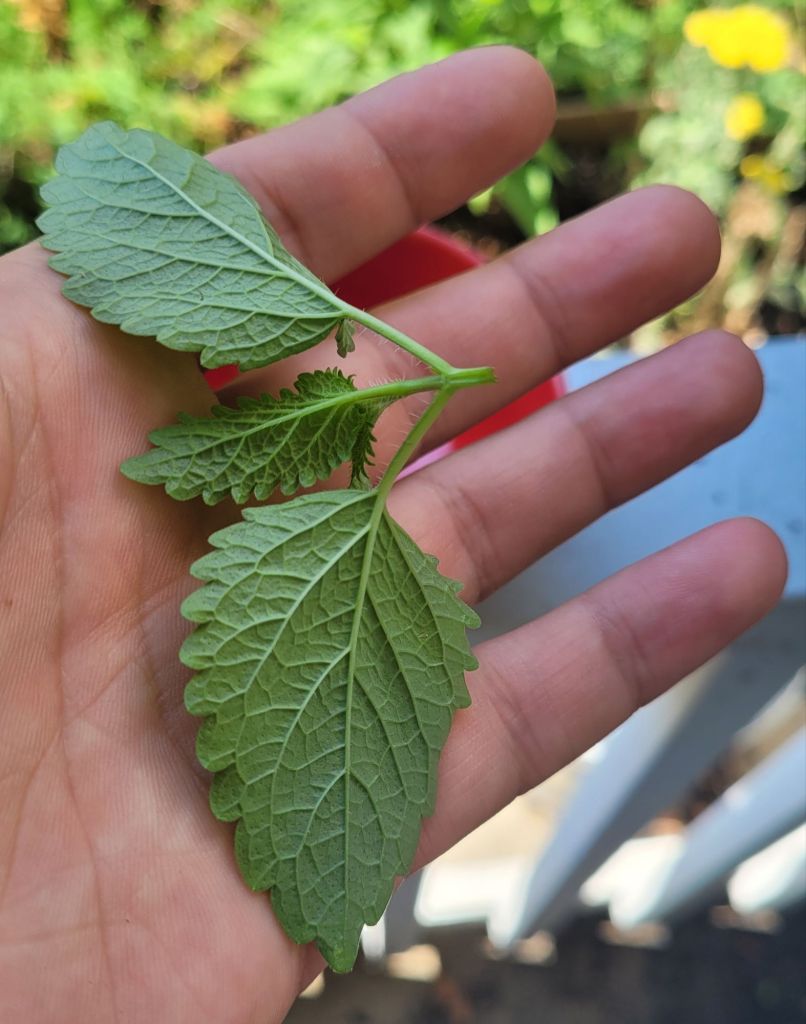
This harvest may look small, but I am looking all over the plant and taking similarly sized cuttings wherever I’m finding them. In this instance I took 7 cuttings.
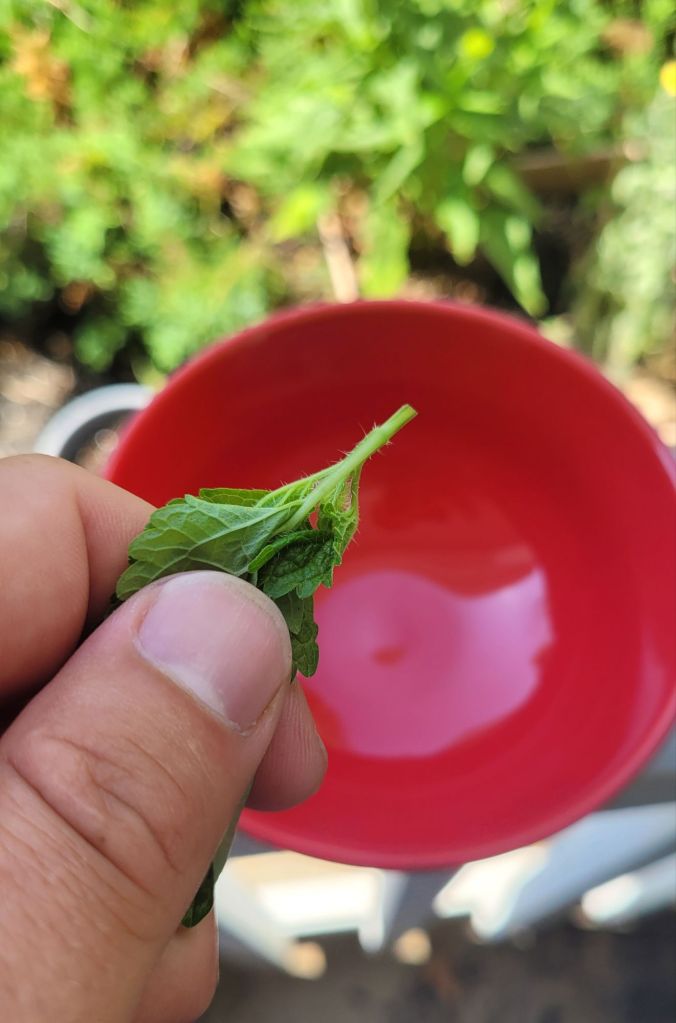
Once you have a group of leaves, gently roll them up in a little “tube” and then use your scissors to chop them up. This allows the alcohol to more efficiently break down the constituents of the plant matter as well as helps the plant material settle easier when submerged in the alcohol.
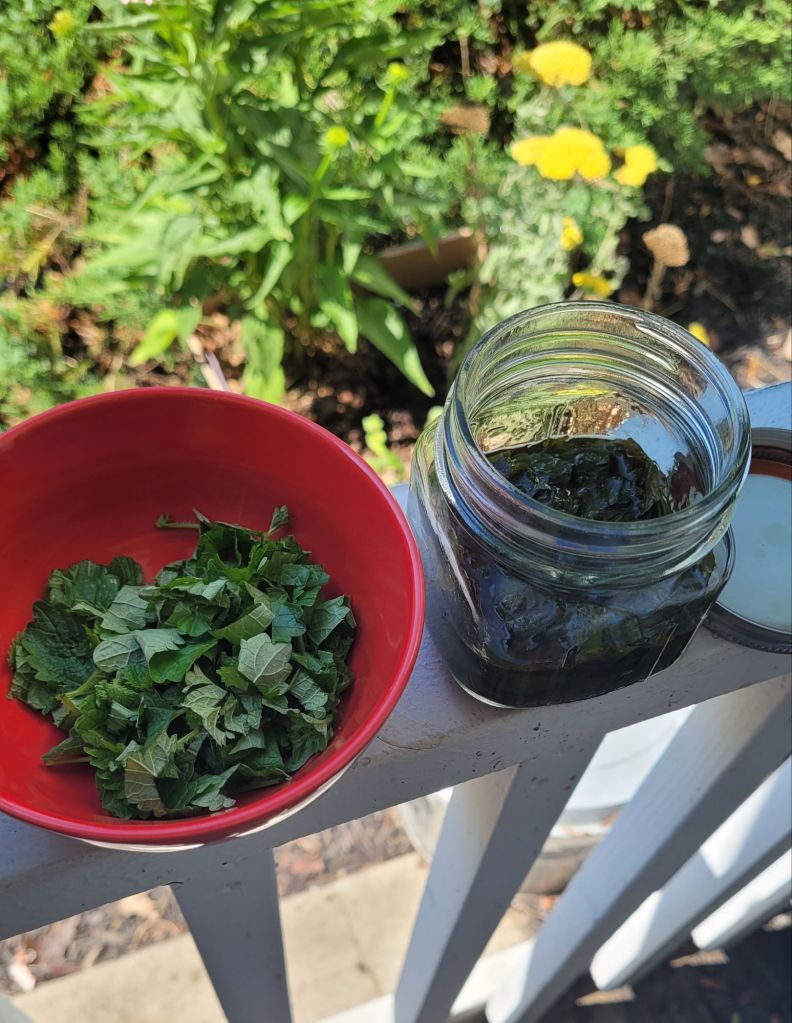
You can see from the picture above that I already have part of a tincture going in my jar. That’s one of the nice things about this method! It is very simple to add more as you go through the growing season. You simply prune your plant, and slowly add more herbs to your tincture! Before we keep going, I should touch on how to prep your jar to start your tincture.
Prepping your jar
Choose a jar that you have a lid for. Thoroughly clean your jar and let it dry. Fill your jar about half way with your high proof alcohol. Later, you will add your herb to the jar and then press it down so it is covered by the alcohol. And that’s all you need to do for prep!
Add your Plant Material to your jar

Take your chopped up plant and add it to your jar.
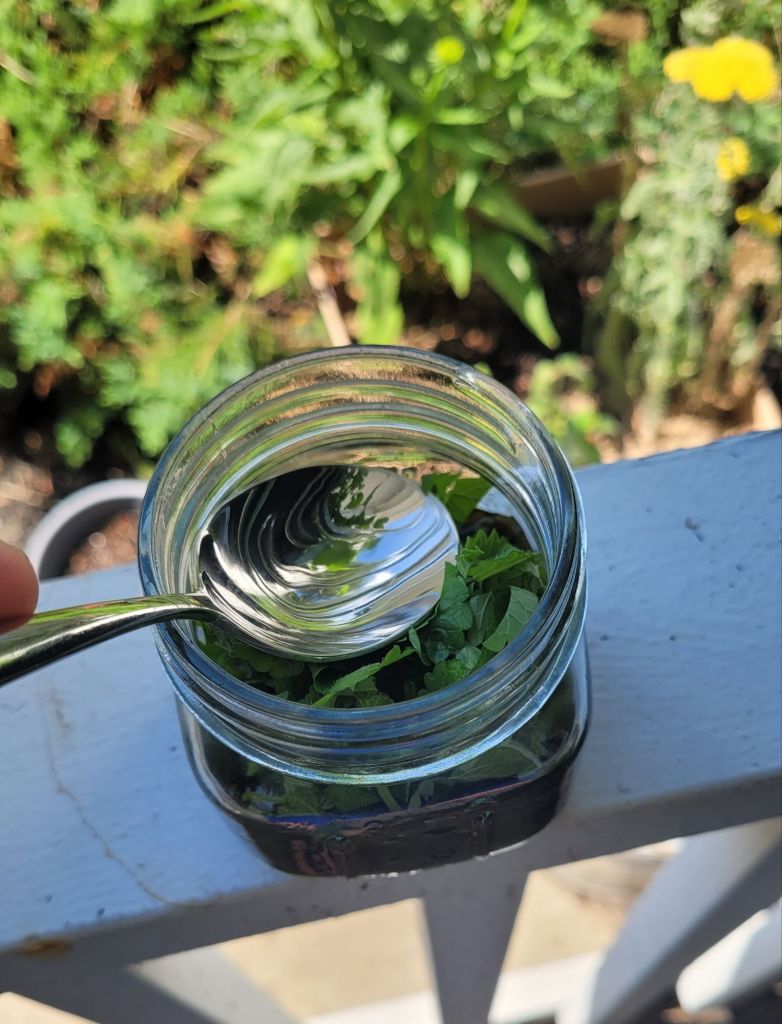
Use your spoon or other clean implement to press the leaves under the alcohol. you want your plant material to be fully submerged in the alcohol to ensure you don’t get mold or any spoilage. The high proof alcohol should kill any contaminants present on your plant material. Submerging the plant in the alcohol ensures no contamination can grow.
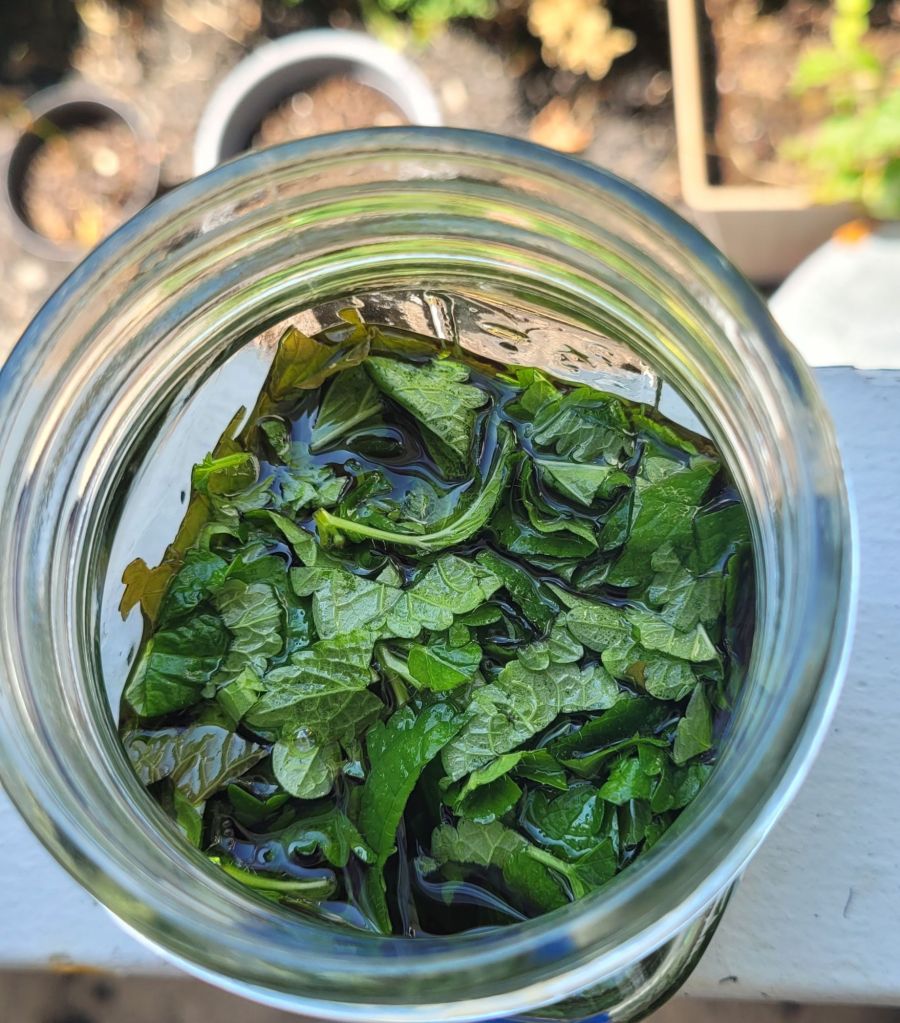
You may run into a situation where you don’t have enough liquid to cover the plant material no matter how much you push. In that situation you can simply add a bot more alcohol to your jar to cover the plant material.
Once you have added your plant material to your jar and ensured it is covered with alcohol, put the cover on the jar and let the extraction take place for around a month. If you’re like me and like to harvest your plants throughout the growing season, you can keep adding to this tincture. Just keep in mind that you let it steep for a month or so after the last addition of plant material to extract the medicinal constituents. Once your desired time frame has passed, simply strain out the plant material and bottle your tincture in a dropper bottle or however you desire. If you bottle your tincture too early, the only downside is reduced potency rather than any health dangers.
What to watch for
Keep an eye out for any mold growth and other spoilage. Your plant material will generally turn a dull brown color but it will still look relatively intact. If your plant material looks like it has melted like old lettuce or grown any mold, throw it out and start over. These problems usually stem from a low alcohol content or your plant materials not being covered by alcohol.
It is normal to get some sediment at the bottom of your tincturing jar, but it is usually a powdery/grainy texture vs a sludge. With a fresh plant tincture you usually don’t get a whole lot of sediment.
Sunlight. There are mixed reports on this, but I tend to keep my tinctures out of direct sunlight.
Typically, if you forget about a tincture for months and months, it is still safe to consume provided none of the other risk factors like mold and spoilage are present. A high alcohol content keeps your tinctures shelf stable for an exceedingly long time. However, if you aren’t comfortable with the state of a tincture, just throw it away and make another.
Conclusion
This simple method is a great way to get started making your own plant medicine. I encourage you to try out some of the involved methods if you feel like it but this is a sufficient way to begin your journey.
Keep in mind that you should look into the herbs you are planning on consuming, positively identify the plants, and err on the side of caution
 Transplant Garden -- Rare and Curious Plants
Leave a comment