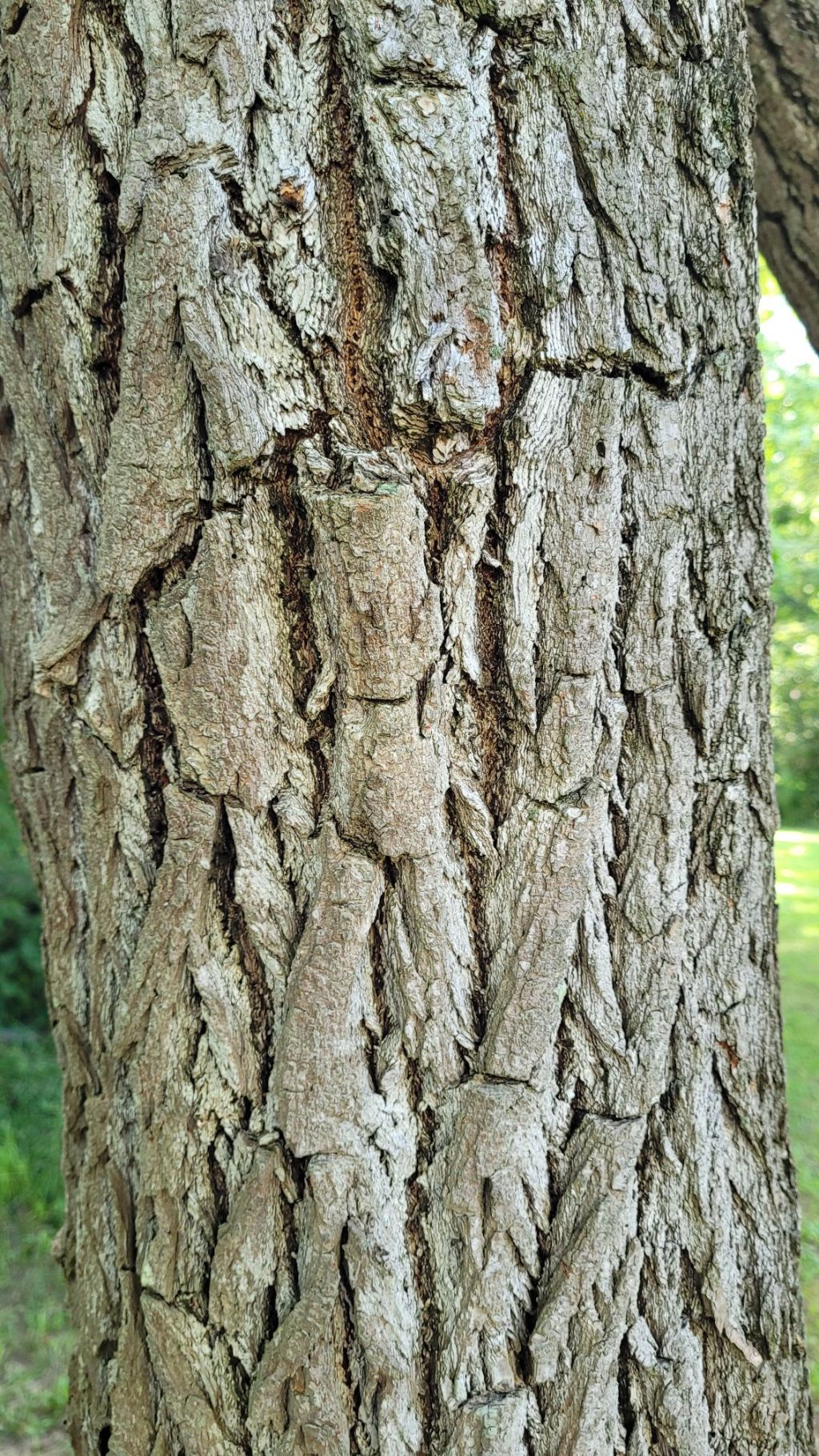
Identifying Sassafras Albidum without the presence of the classic “Dino paw” or mitten shaped leaves is a tricky proposition. Identifying a tree by bark alone is often the most difficult way to perform an ID and should be double checked if you are not confident with your identification. Places like reddit communities and apps like inaturalist are great ways to get the opinions of others on a dicey identification.
Looking at the trunk
The trunk of a sassafras tree may look nondescript, but it has some clues that help you determine if a particular specimen is Sassafras.
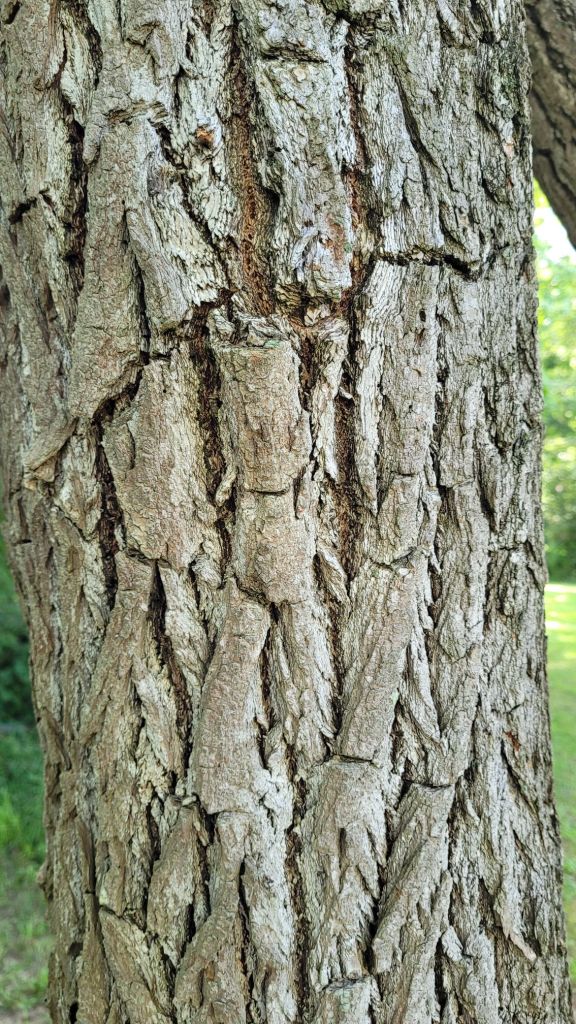
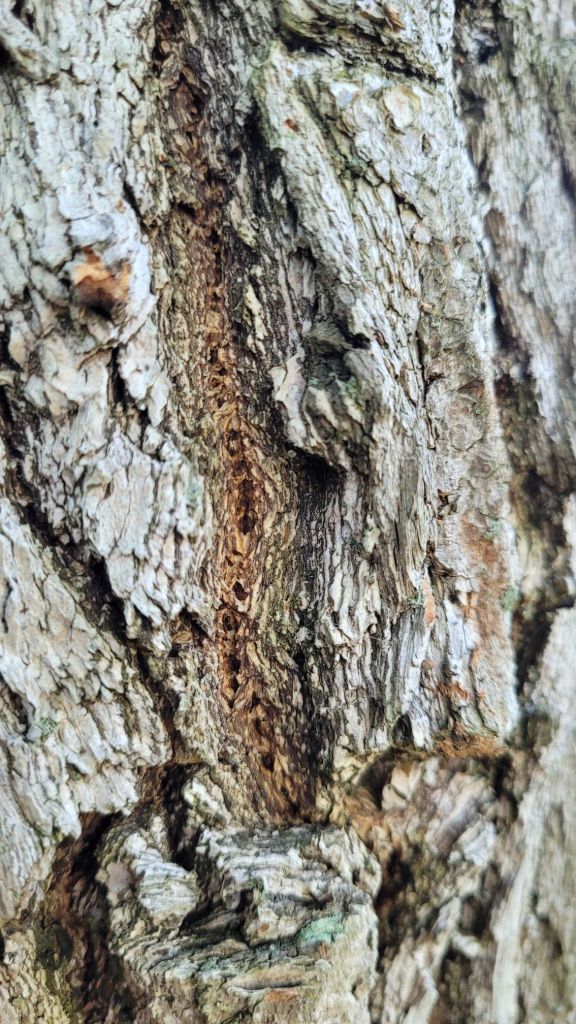
Sassafras bark is thick and rough. There are deep crevasses in the bark reminiscent of canyons. The raised bark is generally wide and can vary depending on the intensity of sunlight it experiences. As you can see from the above images, there are primarily three colors present on this Sassafras trunk: gray, brown, and dull red/orange. I did not scrape off any of the bark to expose the brighter red under bark, but you can see glimpses in the next picture.
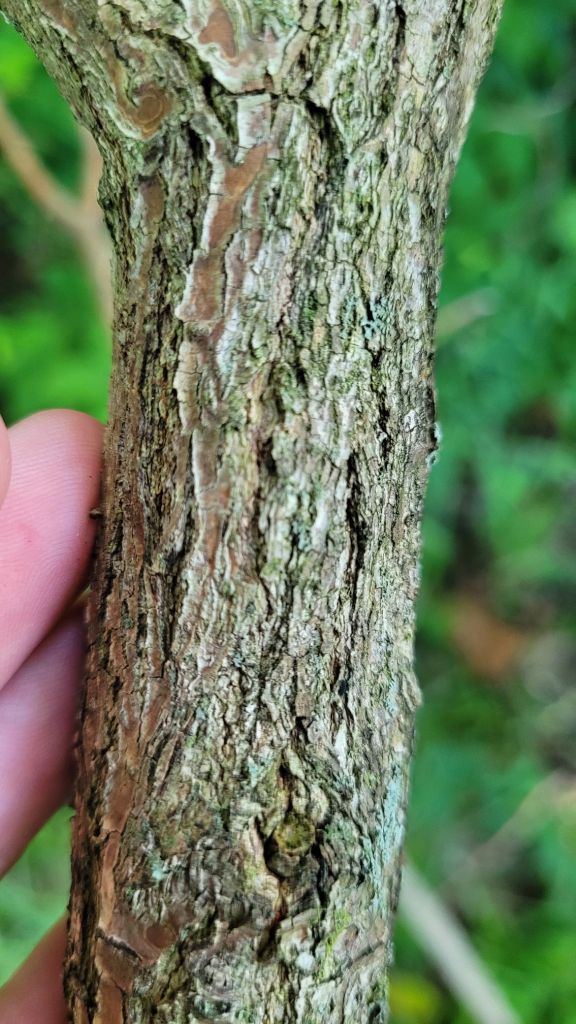
The scraped areas of bark have some of that red color present.
New growth
The old growth of sassafras is a rather dull and muted image. The new growth couldn’t be any more different!
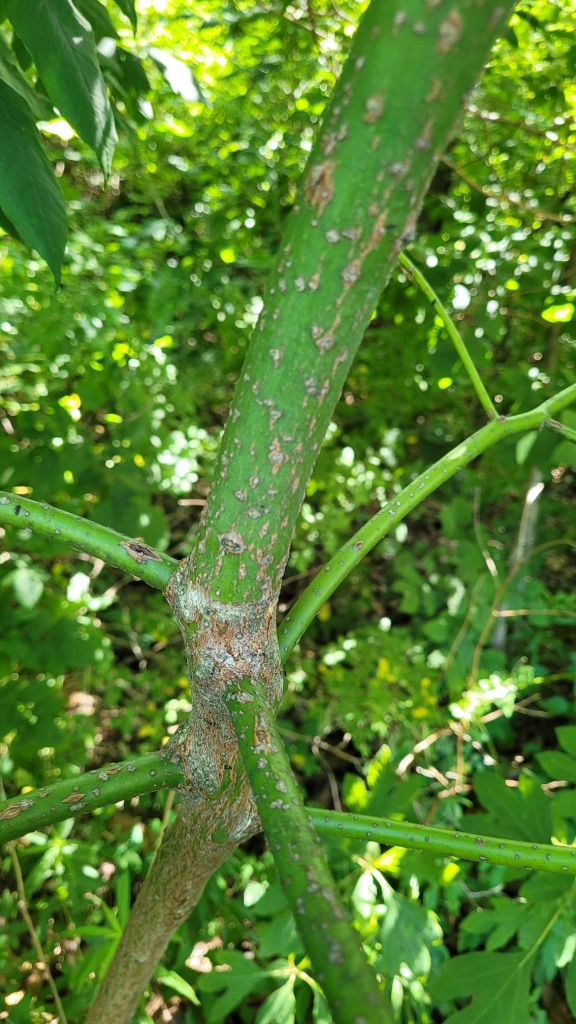
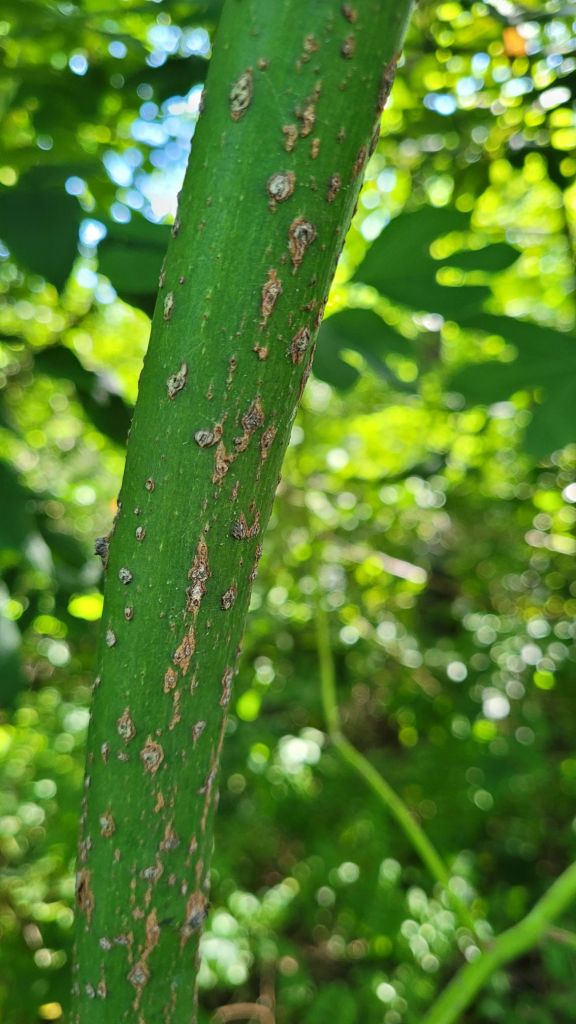
The new growth is a vibrant green that quite suddenly meets with the brown, gray, reddish older bark. You can see a little bit of where the two mingle, but the change still seems abrupt.
The dull dots on the new growth are the start of the mature protective bark. As such, the dots are raised and rough.
Identifying Sassafras by smell
Sassafras has a distinct smell that isn’t present in any of the other trees that look similar in winter. You can rub or break a twig on a sassafras tree to smell the fruity/spicy/root beer smell. An oak or boxelder wont have any sort of scent other than a earthy wood smell. If you are unable to reach any branches to utilize the “sniff test”, you can gently pry off one of the outer layers of a segment of bark. The bark should be thick enough that if you are gentle and precise, you can remove a bit of the bark without causing undue stress on the tree. Sassafras bark is quite pungent and will help you in determining the species in front of you.
visual cues
If you are looking through a cold winter forest for some sassafras, trunks and branches may not be the best way to find your quarry. Sassafras leaves are distinctive even after they’ve fallen. There have been many times where I’ve been moving through the woods and located a sassafras tree because I caught sight of a fallen leaf rather than a tree. Even in summer! It can take a while for the leaves to degrade to a point where they are unrecognizable. If you are pretty confident that you’ve ID’d a sassafras by the other clues, look at your feet. If you are surrounded by dino paw leaves, that may very well be your confirmation
Sassafras has a habit of propagating by root suckering. IE, the tree sends out roots, and sprouts in various places from the root. this offspring is a genetic clone, but serves as a backup for the main tree. This means that often you will find a colony of sassafras rather than one lone tree. This can be both a help for identification and later potentially harvesting. if you are after the root, you would be better served to take the smaller offshoots. The mother tree will replace the stock you have taken. If you take the mother tree, you may have put the whole grove in danger and shot yourself in the foot for later harvests. The mother tree can spare more resources to replenish what you’ve harvested, but the younger clones may not be able to.
Conclusion
Identifying trees in the winter is much tougher than being able to see the leaves that give a species its most distinctive features.
As always, it is best to be absolutely sure you know what you’re harvesting; both for yourself and your health and also for the plant life you are taking. It would be a shame to harvest something and not even be able to use it for what you wanted.
If waiting for spring and the distinctive leaves is what it takes for you to be able to identify a sassafras, or any plant, confidently then wait. take it as a chance to practice patience and the wisdom that comes with it.
Thank you for reading
-Noah
 Transplant Garden -- Rare and Curious Plants
Leave a comment